April 2026
Capstone Project
System Updates centers the rapid development of technology from the early 2000s to the present and how it has shaped the ways we communicate, present ourselves, and interact with each other and our environment. It examines both the software that guided these experiences and the physical devices that made them possible.
Drawing from cyber-inspired aesthetics of the early to late 2000s, System Updates blends sharp, vibrant colors with nostalgic digital and web-based assets, reimagining outdated technologies for a new digital age.
This project consist of 3 mediums an zine, interactive installation, and website, all which works together creative a moment of retrospection.
Medium 1 focuses on the software that shaped early Generation Z (1997–2005) as they developed alongside emerging devices and platforms, reflecting their experience of constant adaptation between physical and digital spaces.
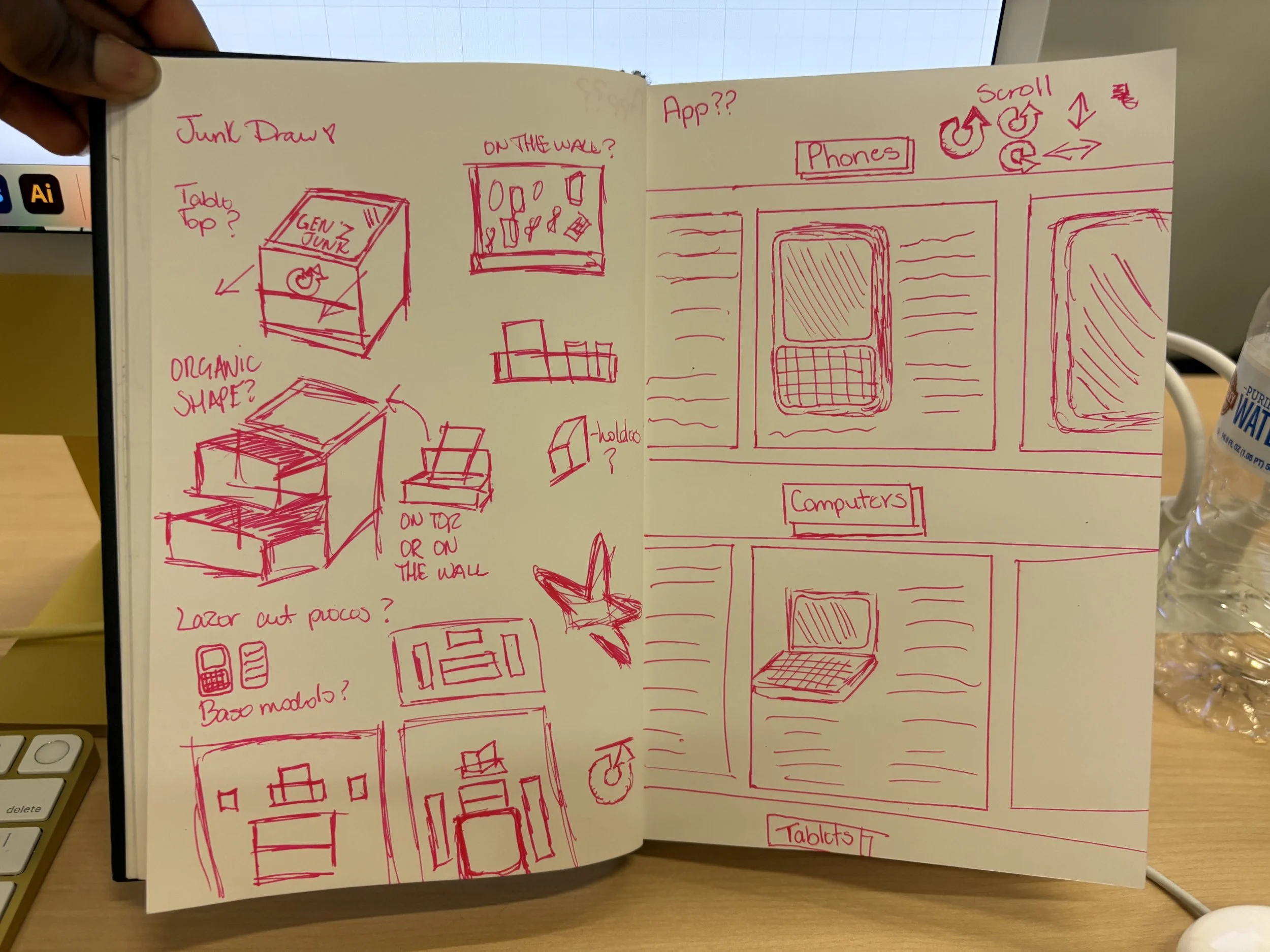
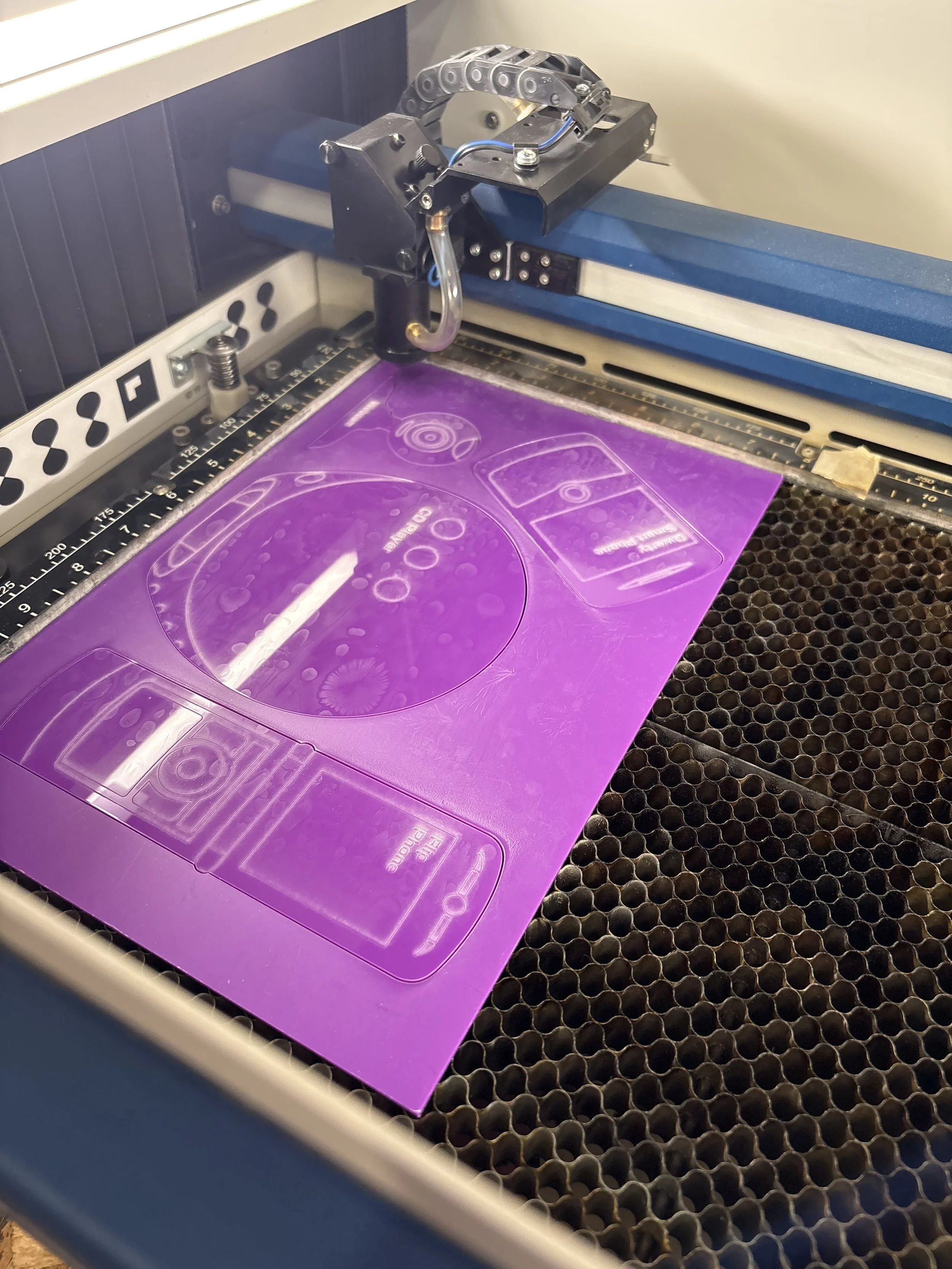
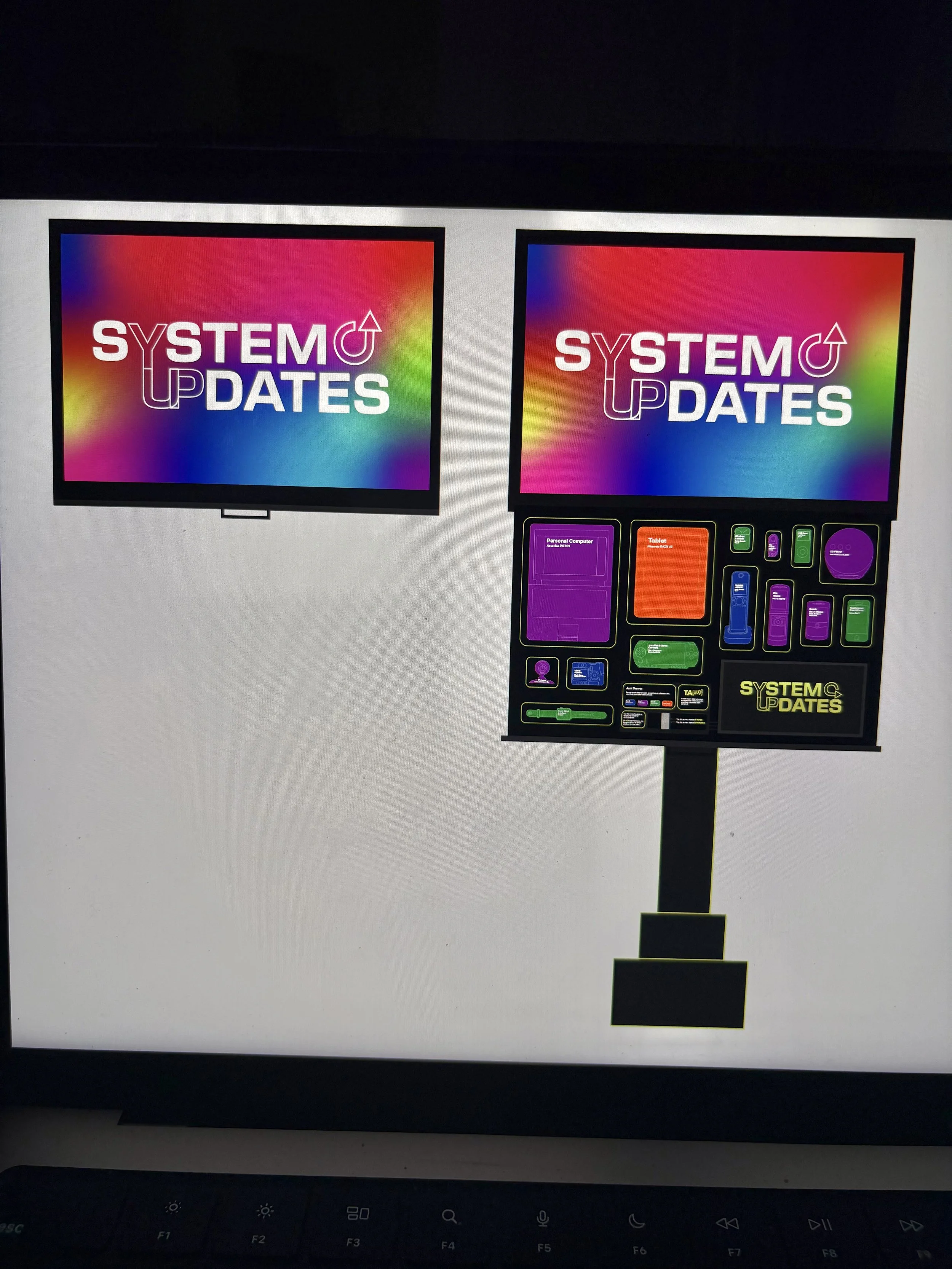
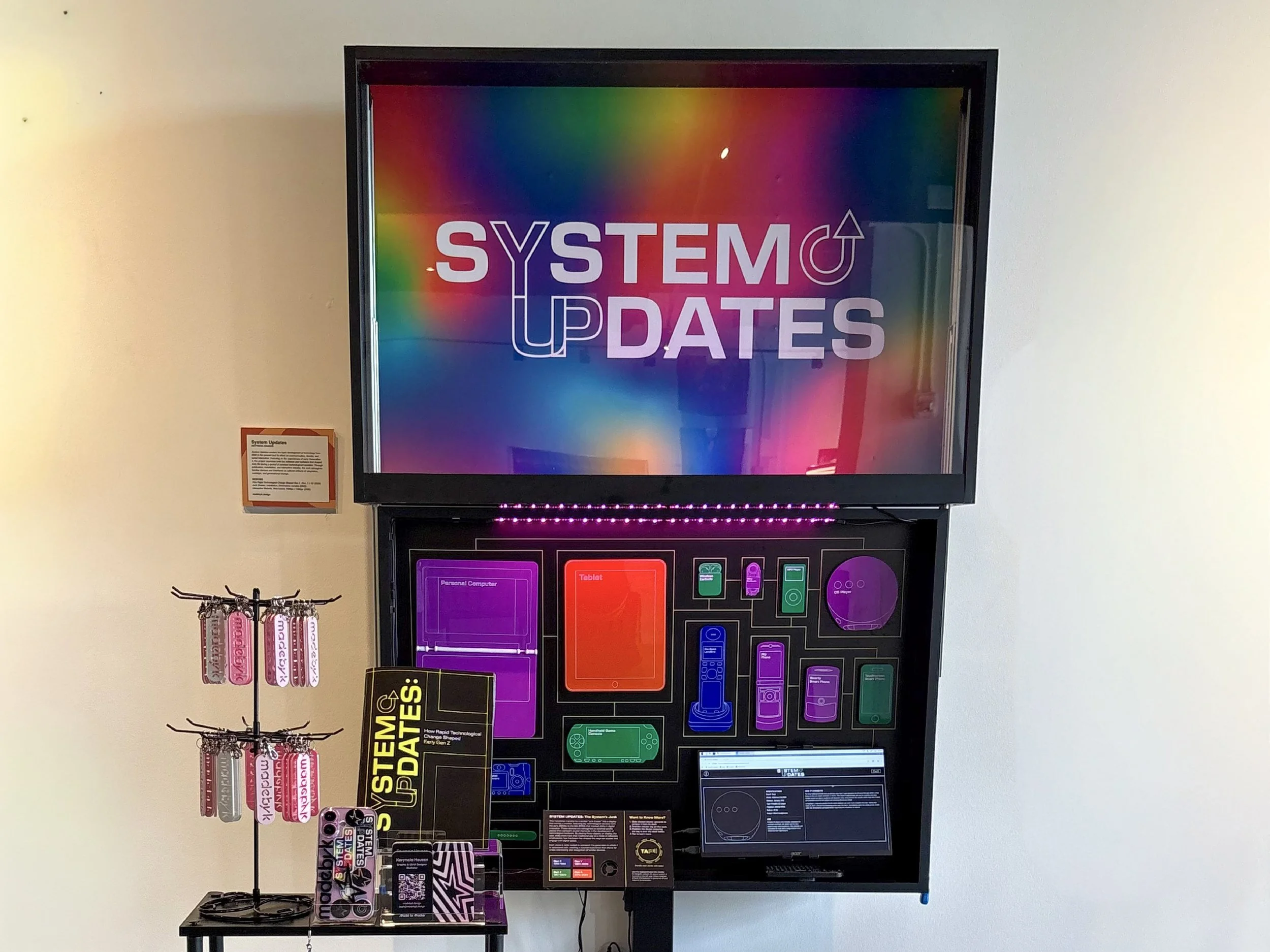
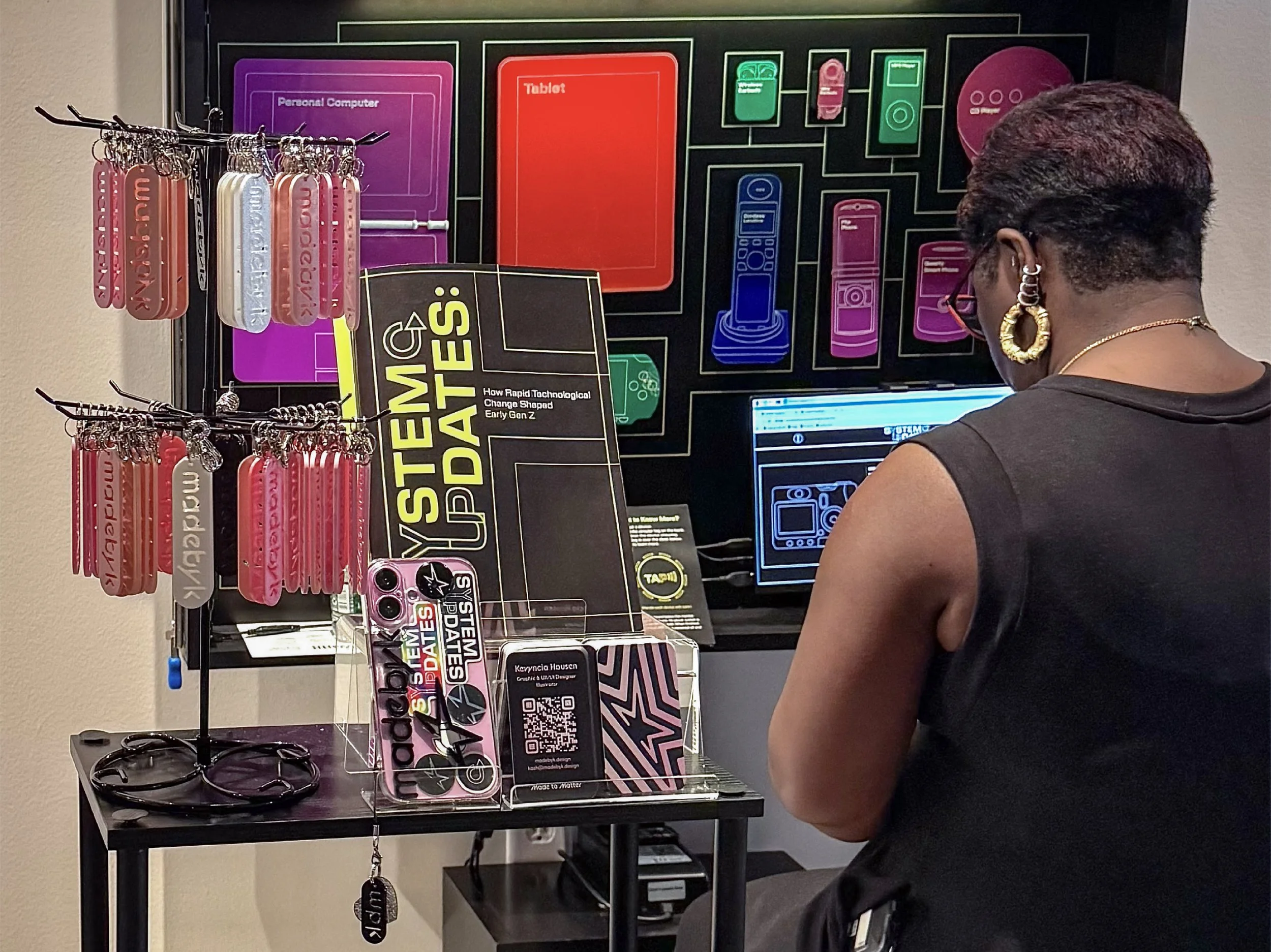
Medium 2 is a conceptual “junk drawer” that functions as a display case mimicking the structure of a monitor, holding laser-etched acrylic devices color-coded by the generation most associated with them.
Medium 3 is an interactive website that expands on the installation, allowing users to select each device to view its specifications while also reflecting on how technology has connected five generations: Baby Boomers, Gen X, Gen Y, Gen Z, and Gen A.
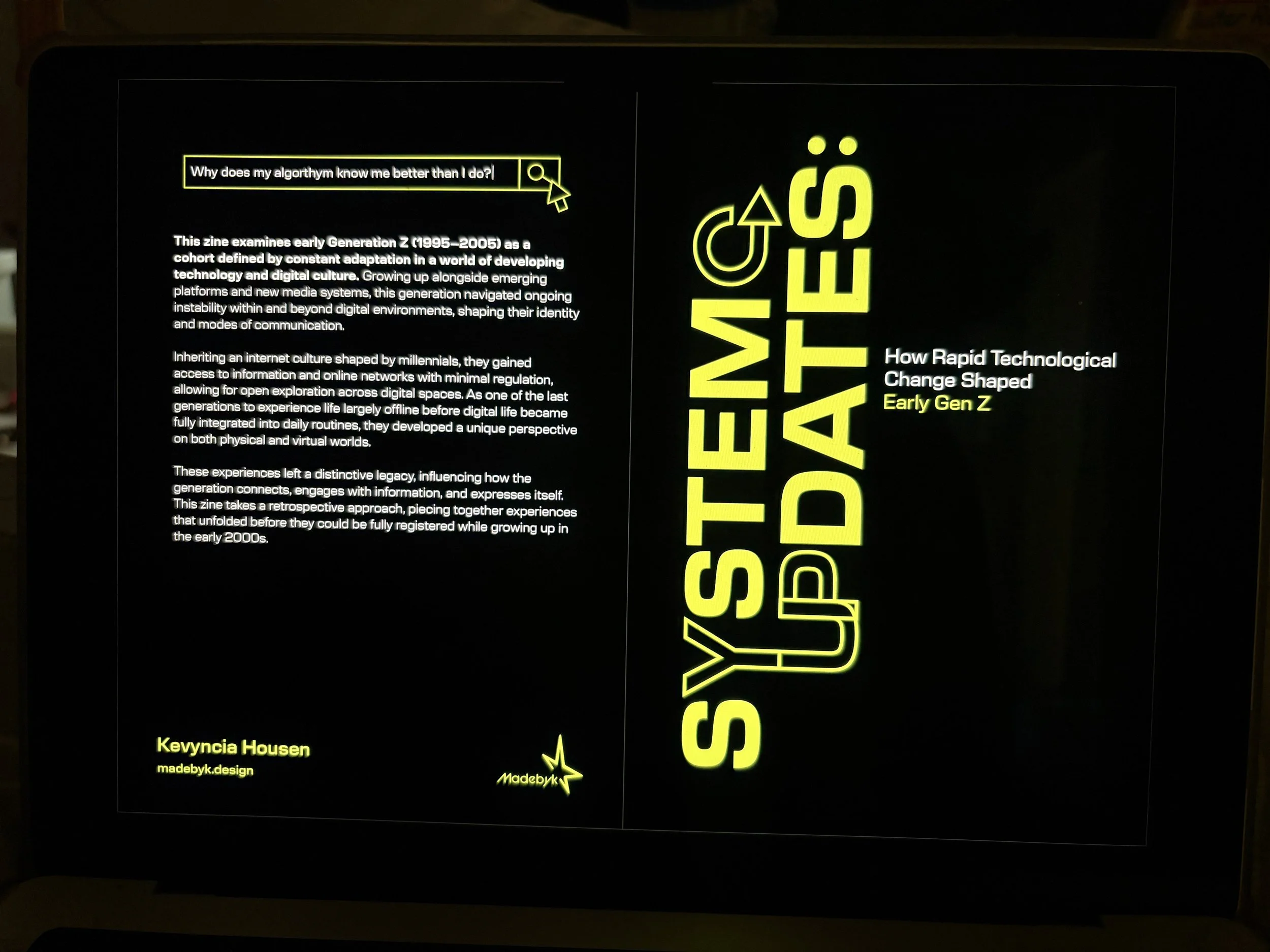
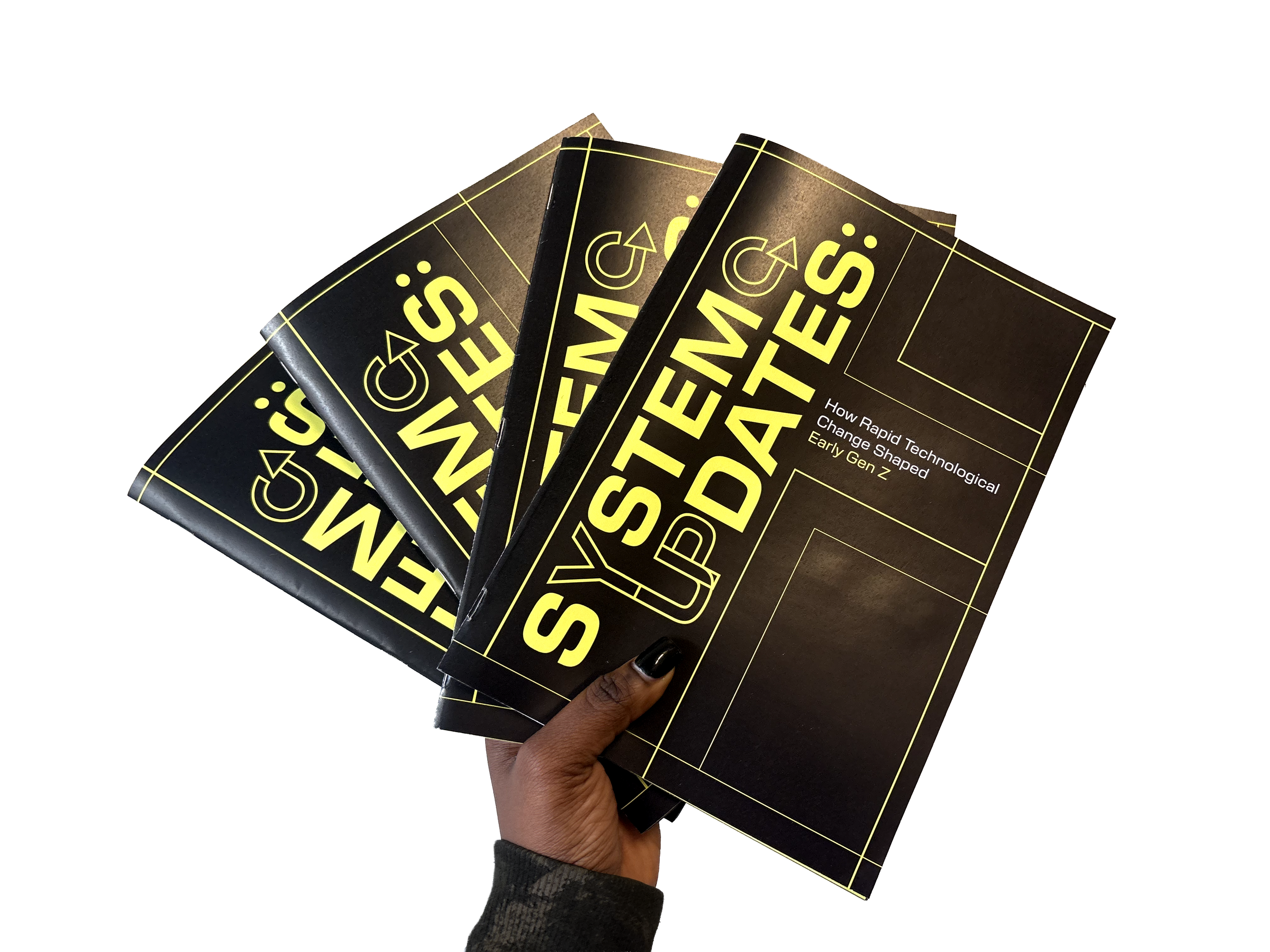
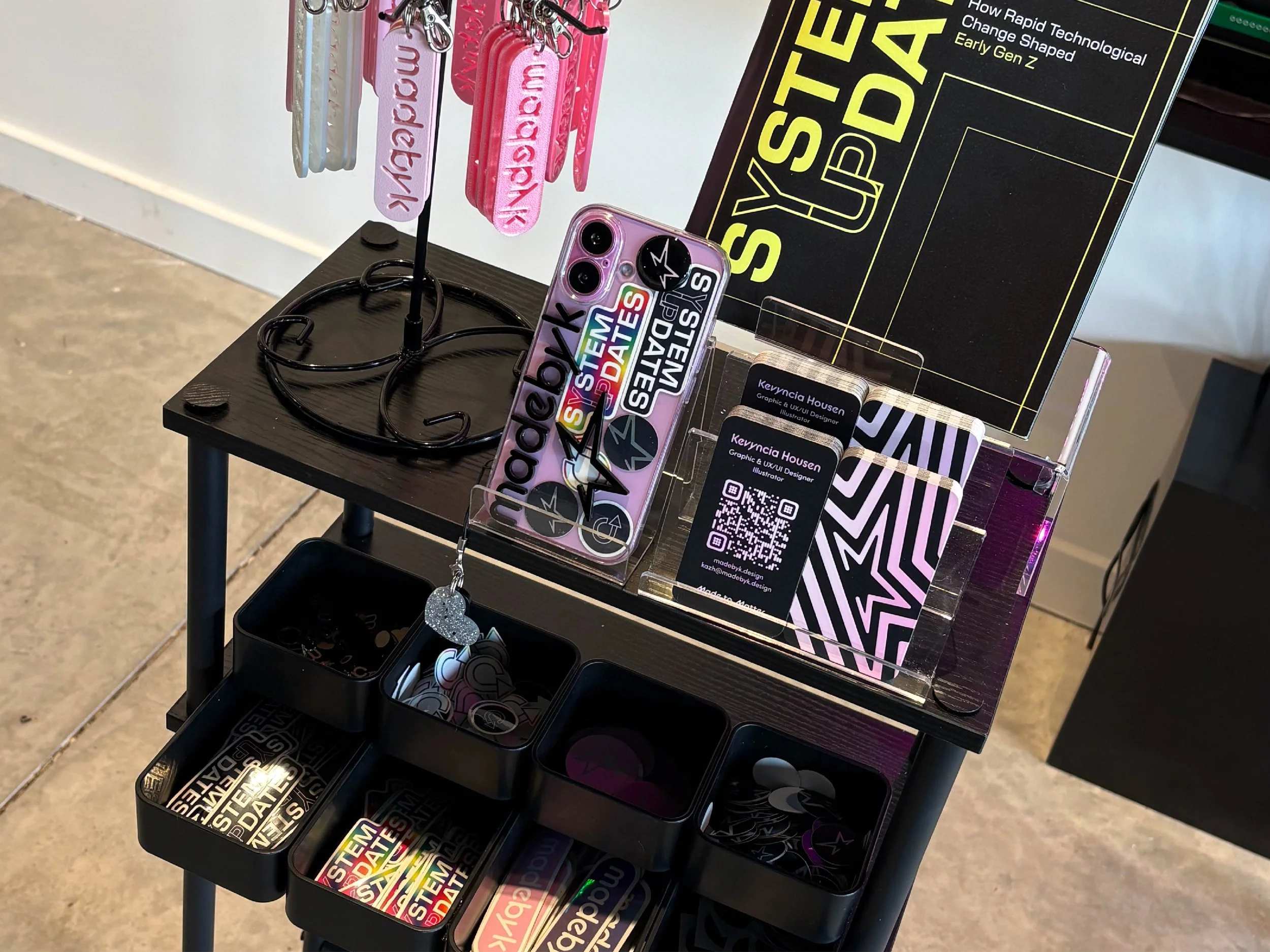
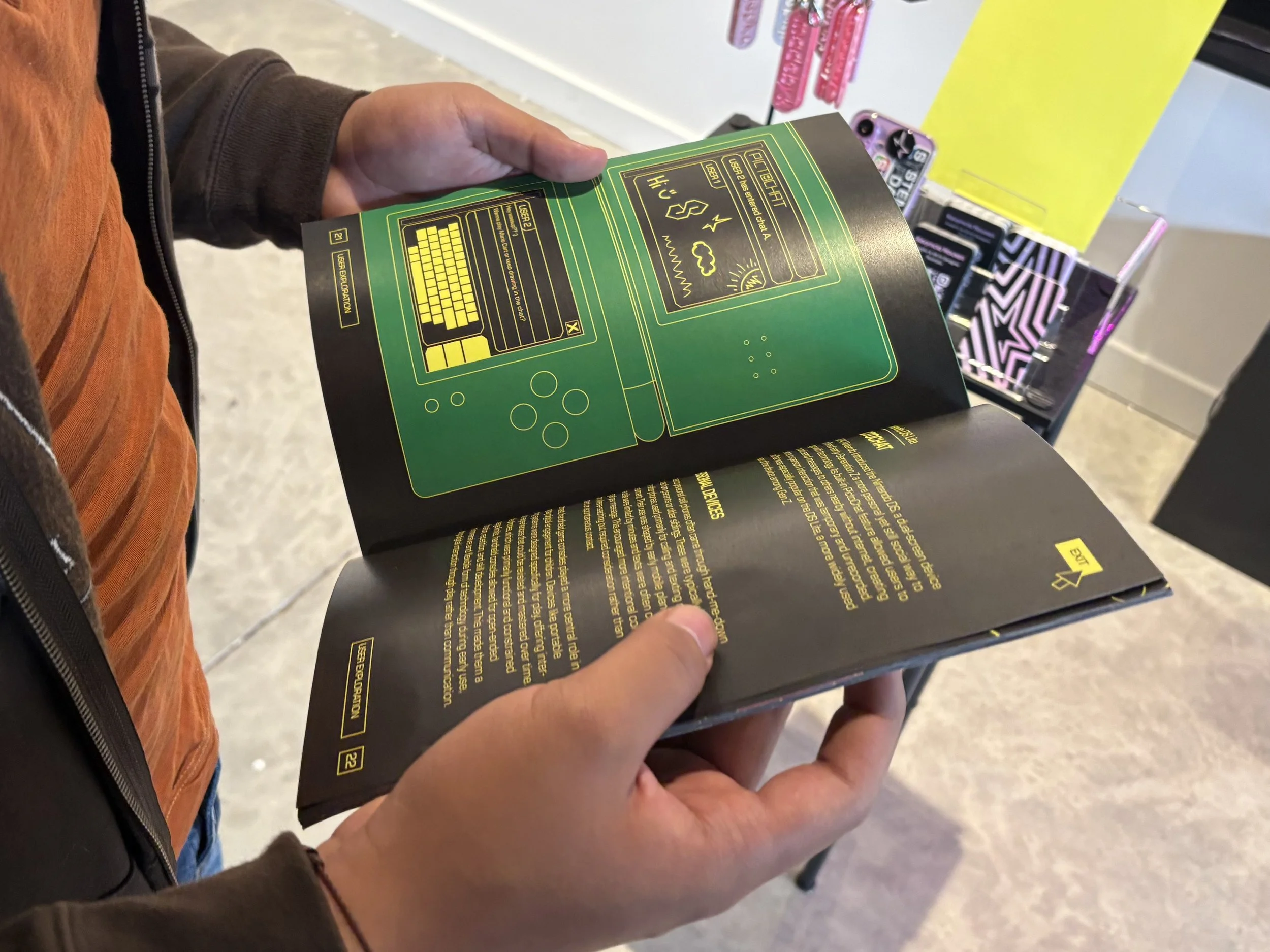
7×10” Saddle bound Zine
How Rapid Technological Change Shaped Early Gen Z
This zine examines early Generation Z (1997–2005) as a cohort shaped by constant adaptation within developing technology and digital culture. Growing up alongside emerging platforms and new media systems, this generation navigated instability both online and offline, influencing identity formation and communication styles.
Inheriting an internet culture shaped by millennials, they gained access to information and online communities with minimal regulation, allowing for open exploration across digital spaces. As one of the last generations to experience life largely offline before digital life became fully integrated into everyday routines, they developed a unique perspective on both physical and virtual worlds.
This zine takes a retrospective approach, piecing together experiences that unfolded before they could be fully understood, reflecting on how early digital environments shaped the generation’s relationship to technology, identity, and self-expression.
Interactive Installation
The System’s Junk
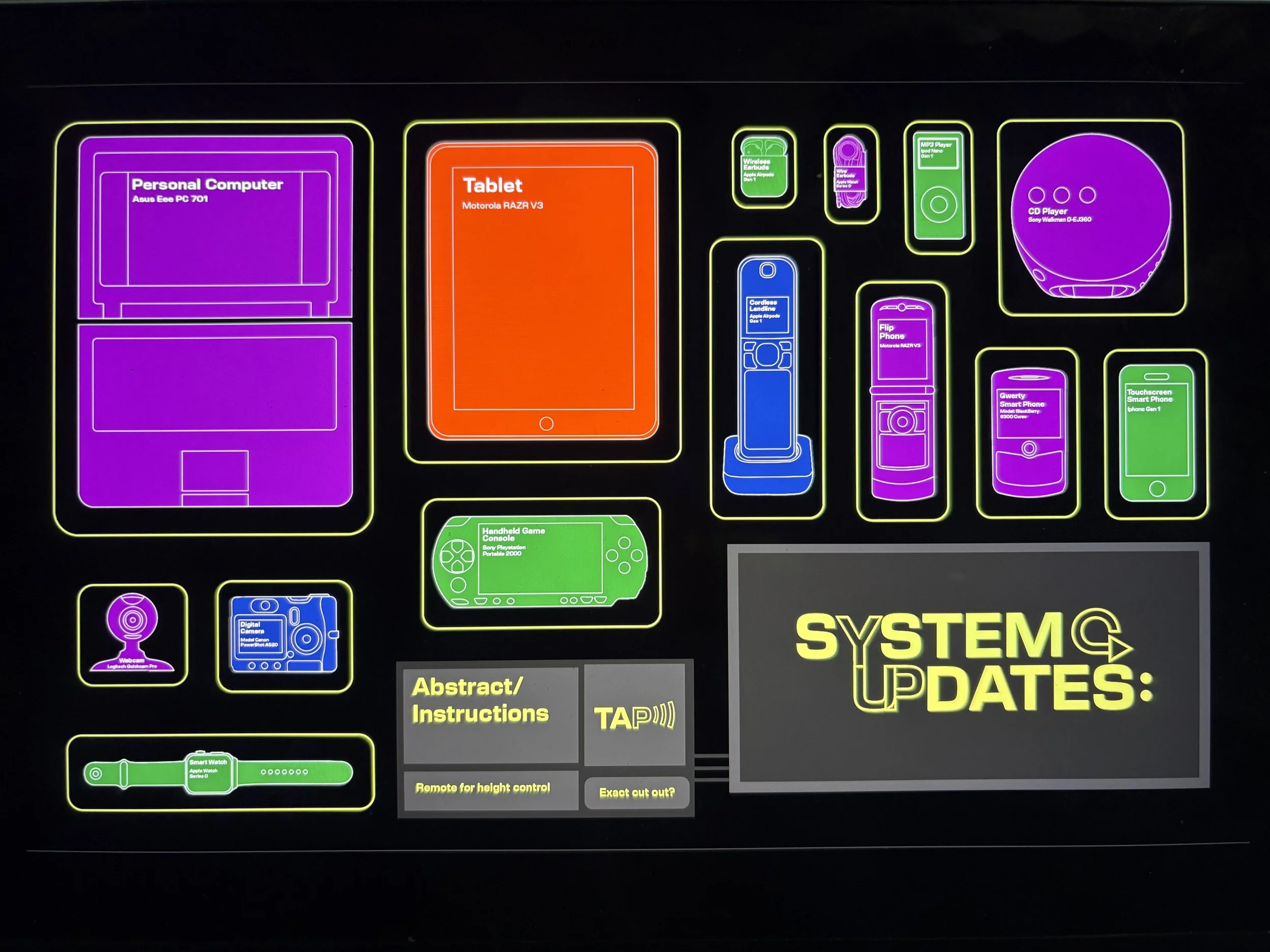
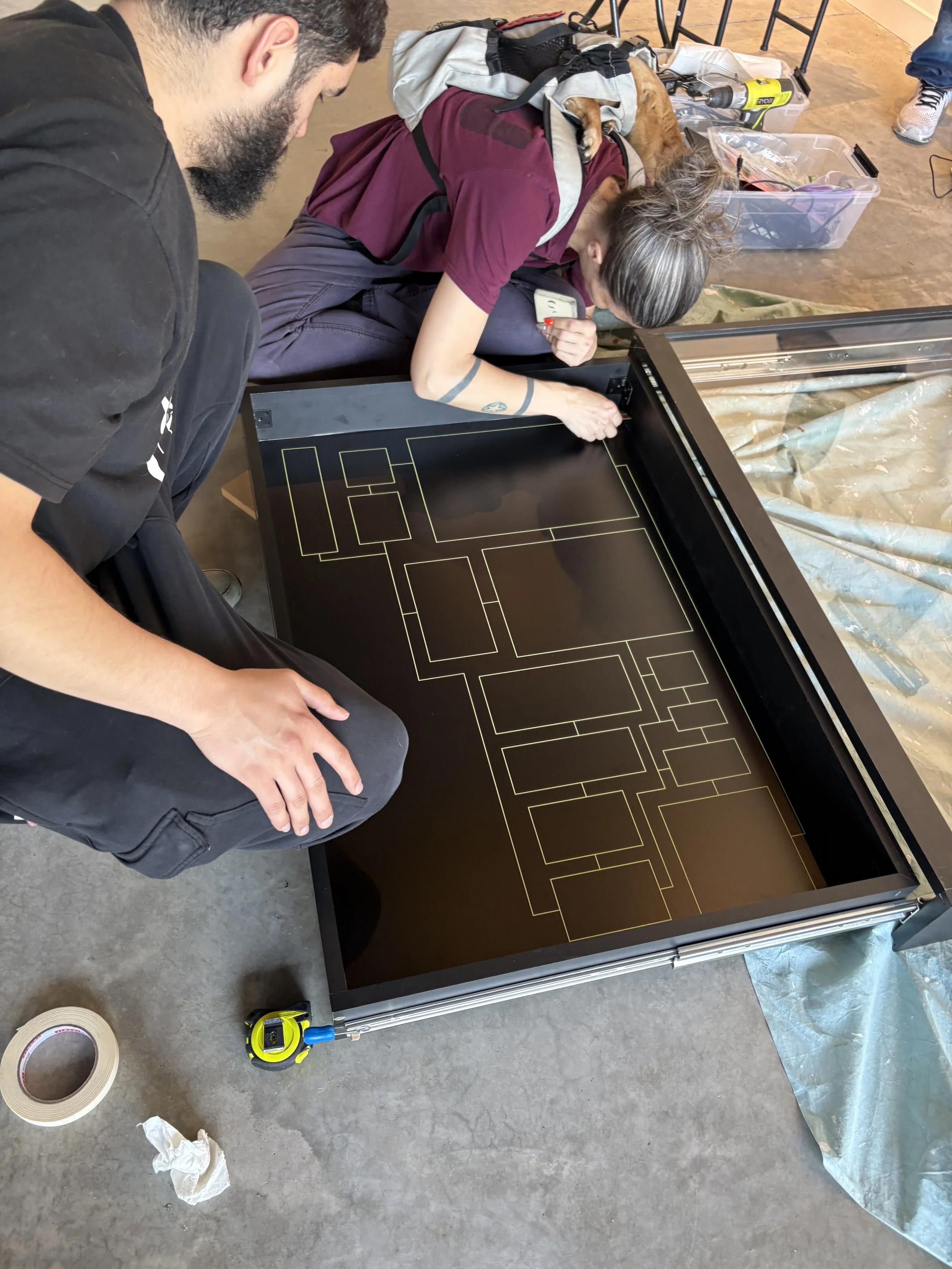
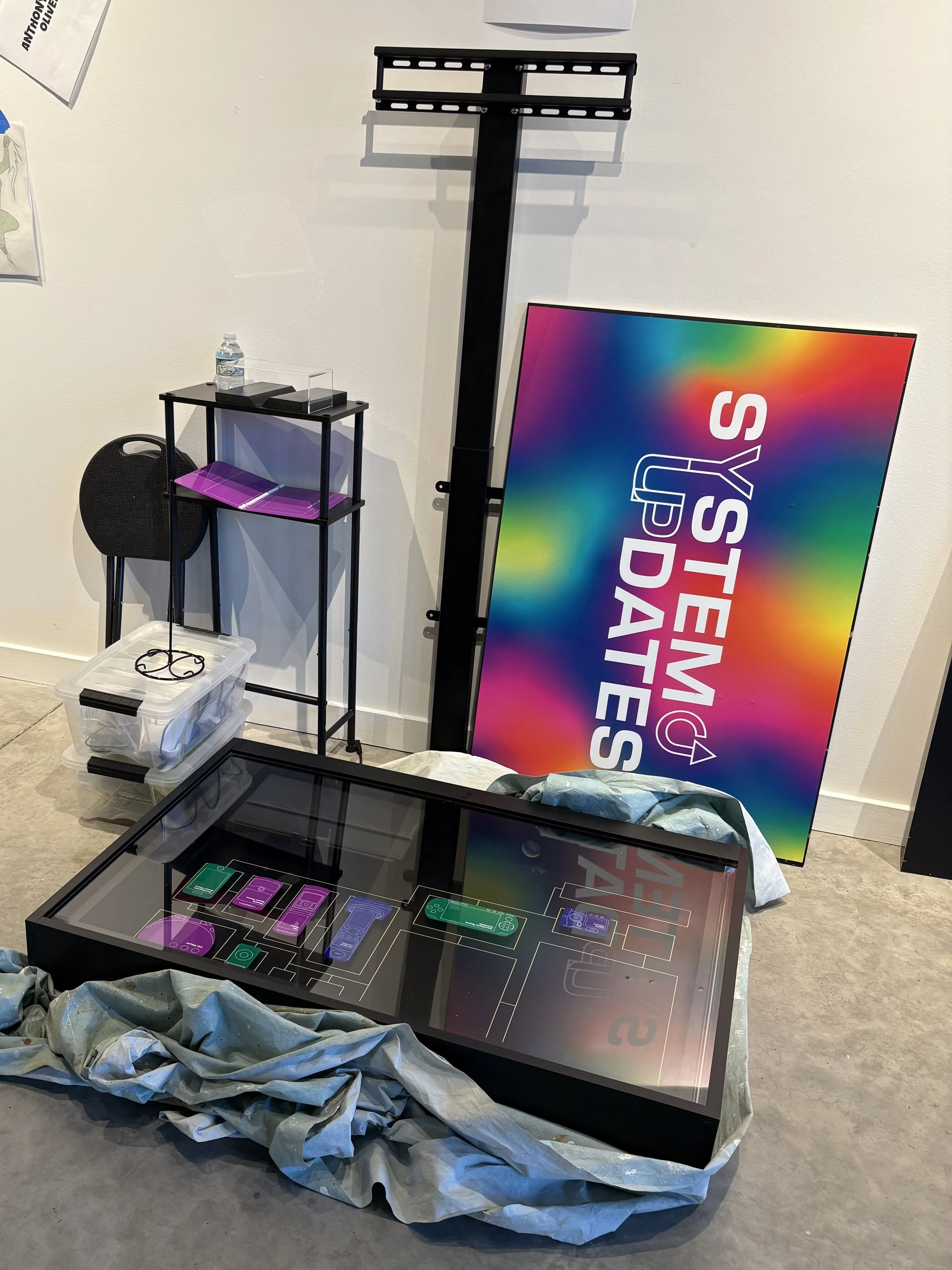
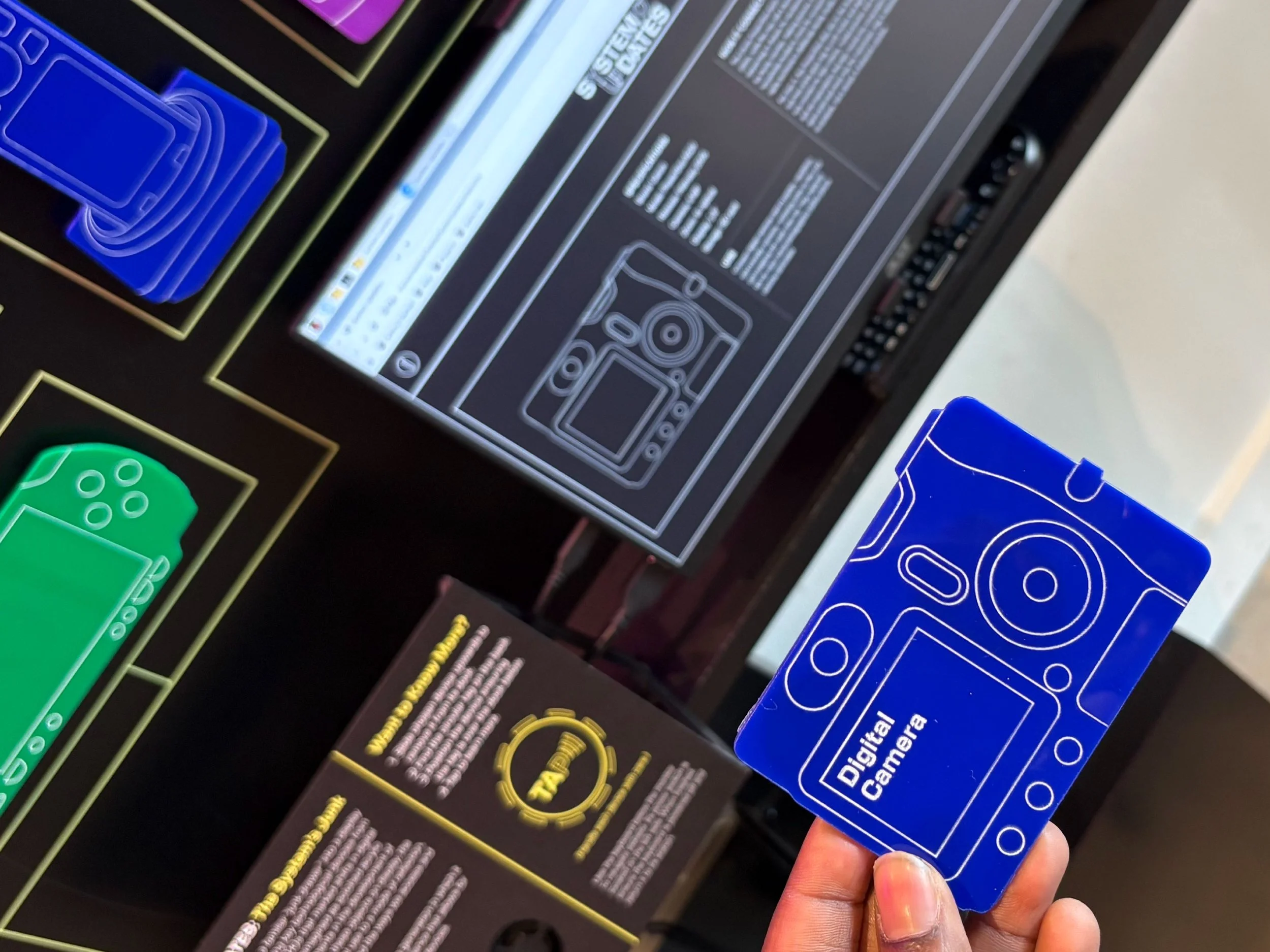
This installation transforms a familiar “junk drawer” into a conceptual display that mimics the design and inner structure of a monitor. Functioning as both a display case and docking station for the website, it features key technological devices from the early 2000s to the late 2010s that marked shifts in digital innovation. The drawer itself is lined with vinyl as the background, while the devices are recreated as laser-etched and inked acrylic pieces, representing pivotal moments in the development of technological hardware.
By placing these objects on display, the work shifts them from everyday functional items into artifacts of reflection, emphasizing how hardware has shaped the ways we access and engage with digital space. Each piece is color-coded by the generation most associated with it, creating a curated experience that allows for recognition, comparison, and cross-generational connection. The drawer becomes both archive and interface, preserving obsolete technology while highlighting its continued cultural significance.

Each device is attached into the drawer by magnet and has a NFC tag allowing it to function with the website.

Interactive Website
About the System’s Junk
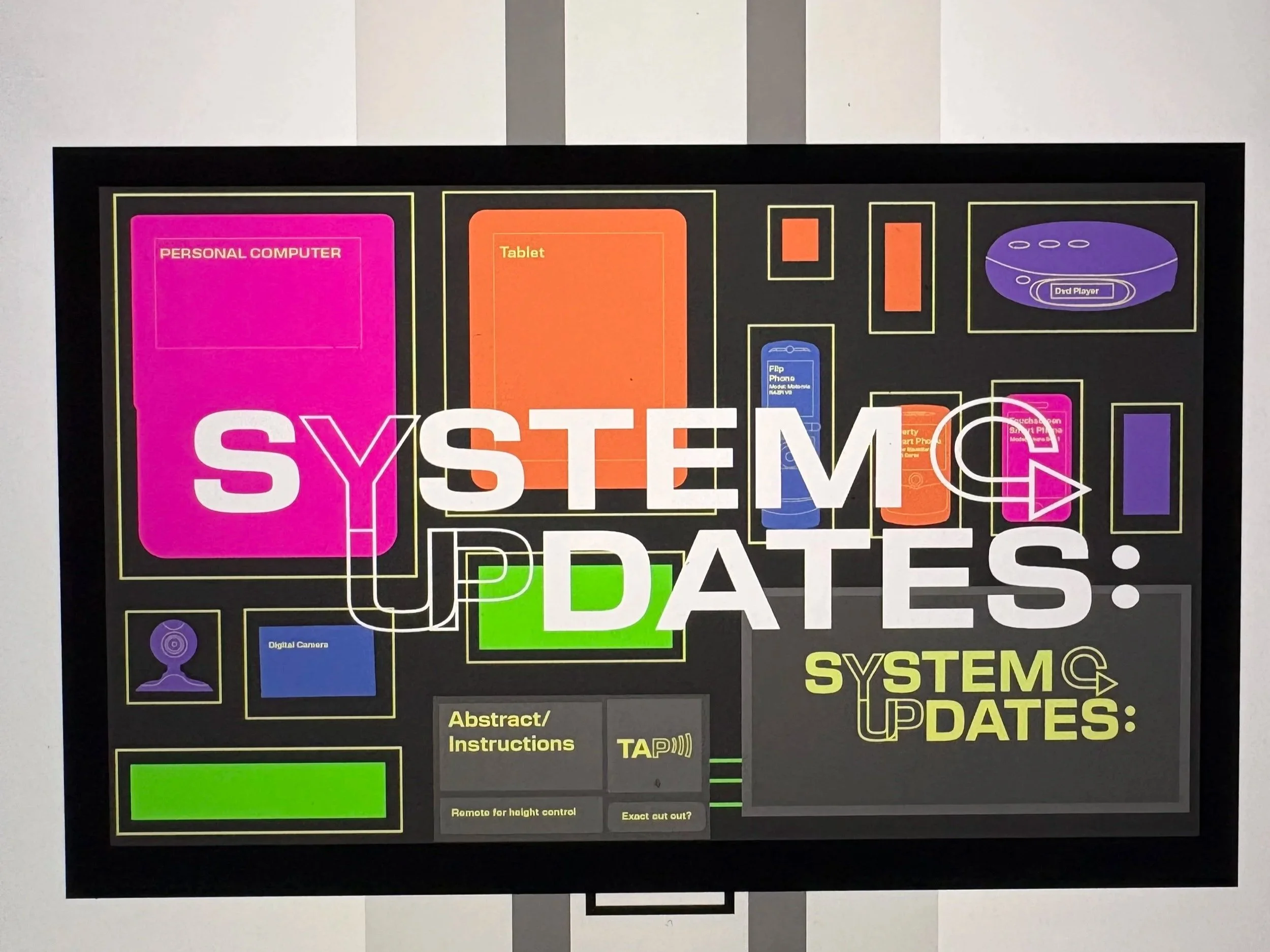
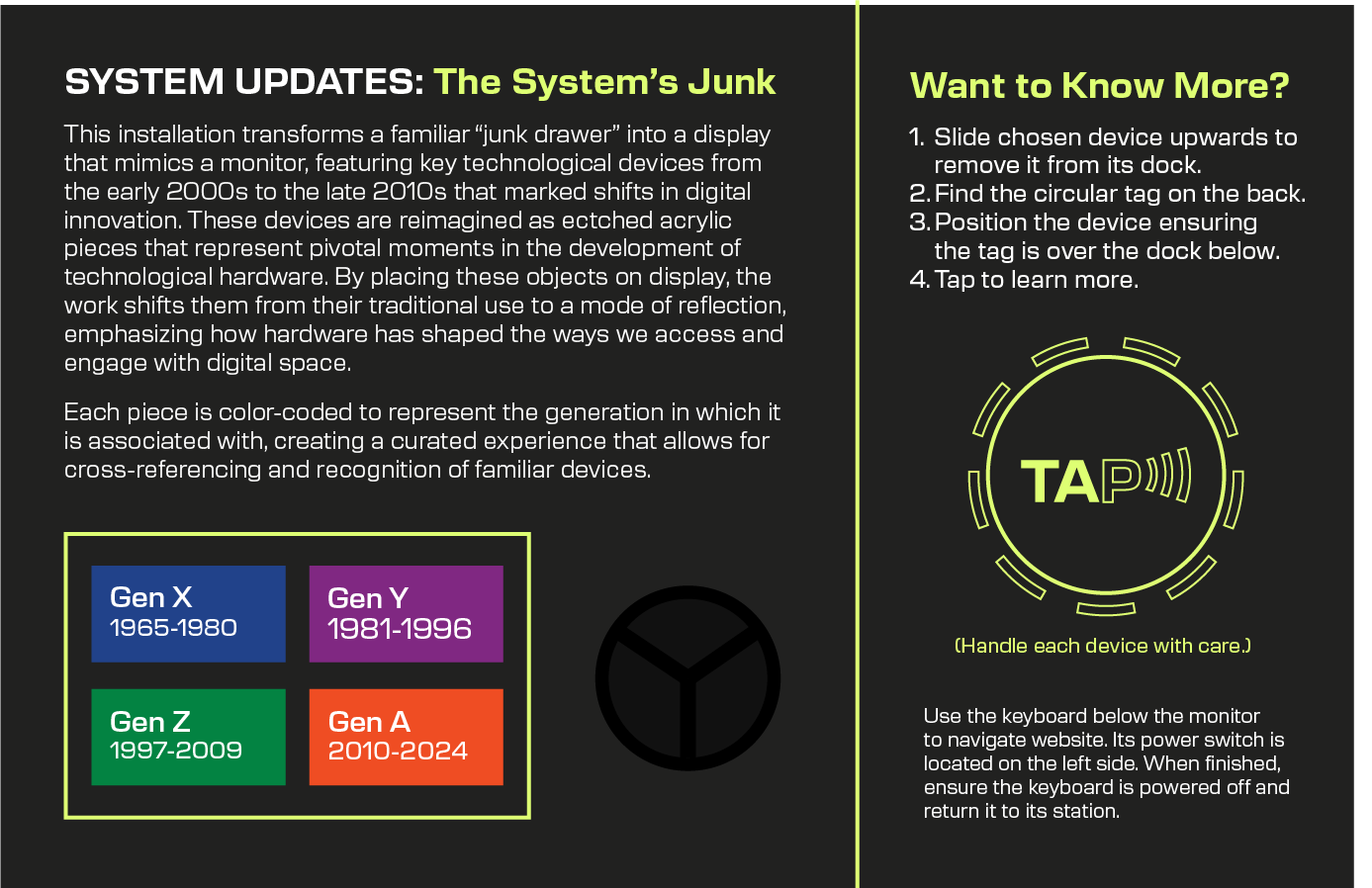
The website functions as an extension of the physical junk drawer installation, translating the categorized laser-cut and etched devices into a digital format that provides additional information and context. Users can interact with each object through a structured interface, where selecting a device after being tapped on dock, reveals its specifications, purpose, and cultural significance within its associated generation.
The site reinforces the generational framework established in the installation by organizing devices according to their primary user groups, making relationships between technologies more legible. Moving between physical objects and digital representations expands the viewer’s understanding of how these devices functioned within everyday life.
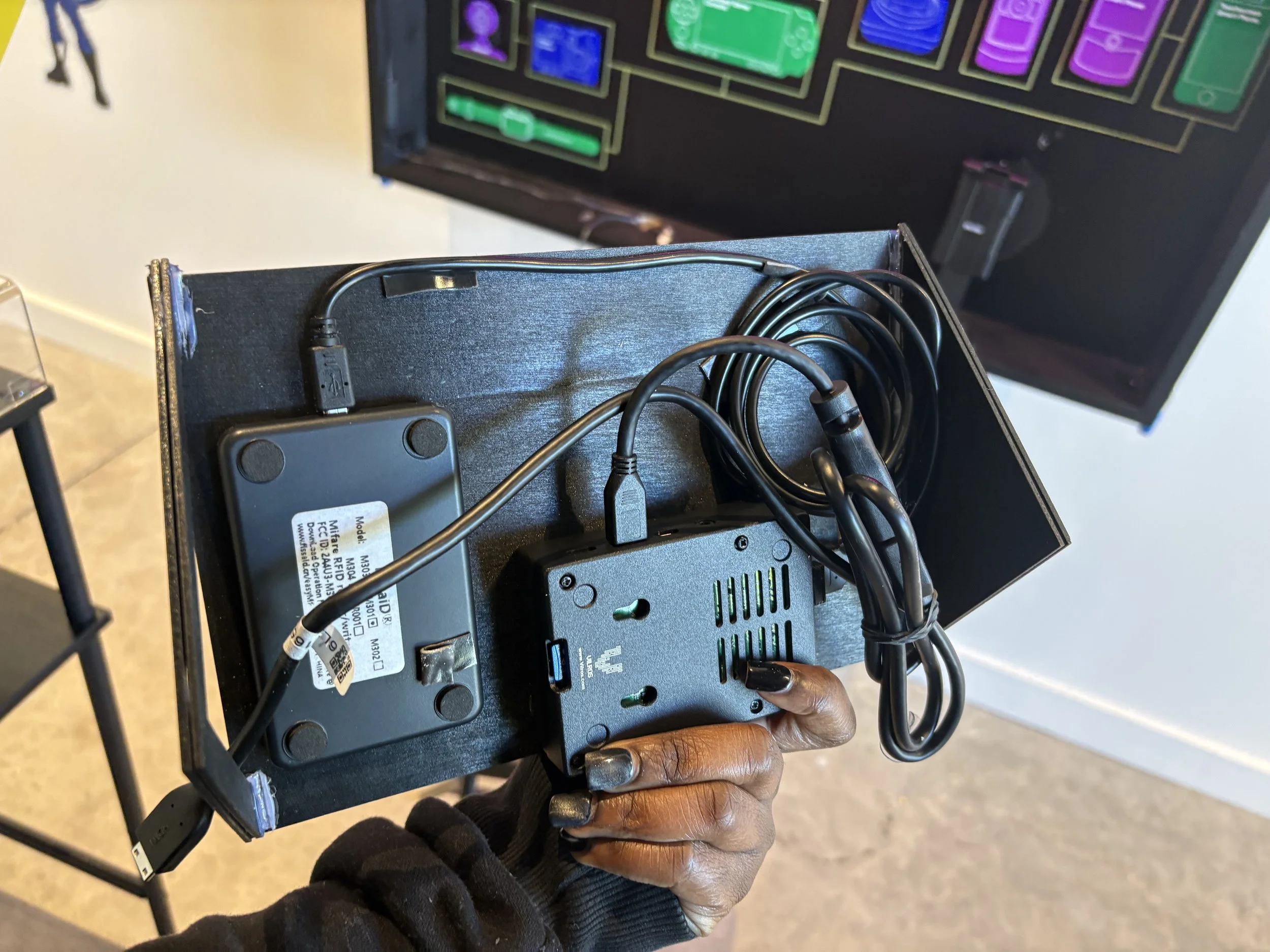
Instruction+Tap Interface Dock
A reflective Q&A section connects Baby Boomers, Gen X, Gen Y, Gen Z, and Gen A through shared technological experiences, placing the work within a broader timeline of communication and interface evolution.
Handheld keyboard+touchpad
Monitor Hosting Interactive Website
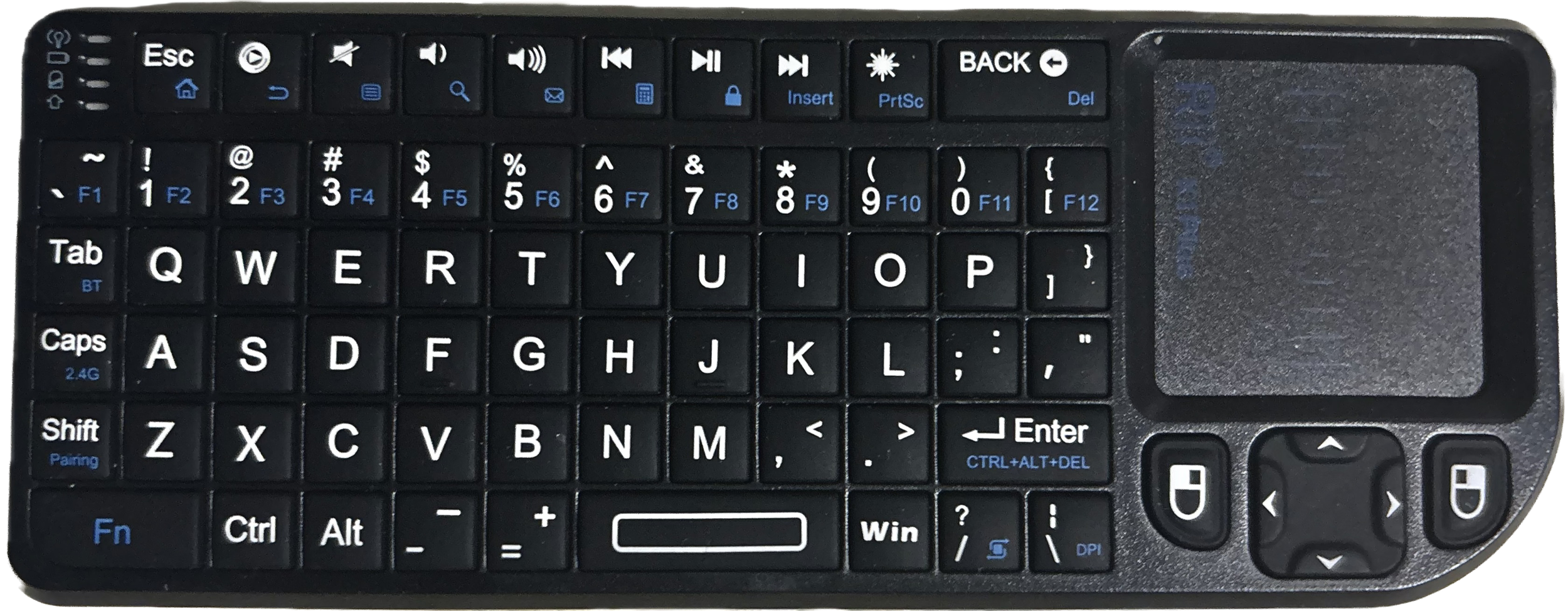
This 6” keyboard was provided below the monitor to navigate the website. It connected via usb to the raspberry pi located under the instruction dock. It was carefully selected as it reminiscent of the hardware this project focuses on.
How did we get here?